27th-29thAugust, 2022
- : introduction
HIDIG organization is one of the national organization working on humanitarian intervention in Bay, Bakol and Hiran region through provision of primary health care services as well as nutrition and other humane intervention, however, having the main beneficiaries are vulnerable and displaced population in Hiran, Bay and Bakol region and the field staff are in contact of huge number of these displaced community member with poor health status .The new emergency project consists of three components that is health, Nutrition and WASH program where the project have this period trained project health staff with integrated AWD/cholera case management (AWD) this was intended to give basic skills and knowledge so the staff are able to deliver quality services delivery to the affected population
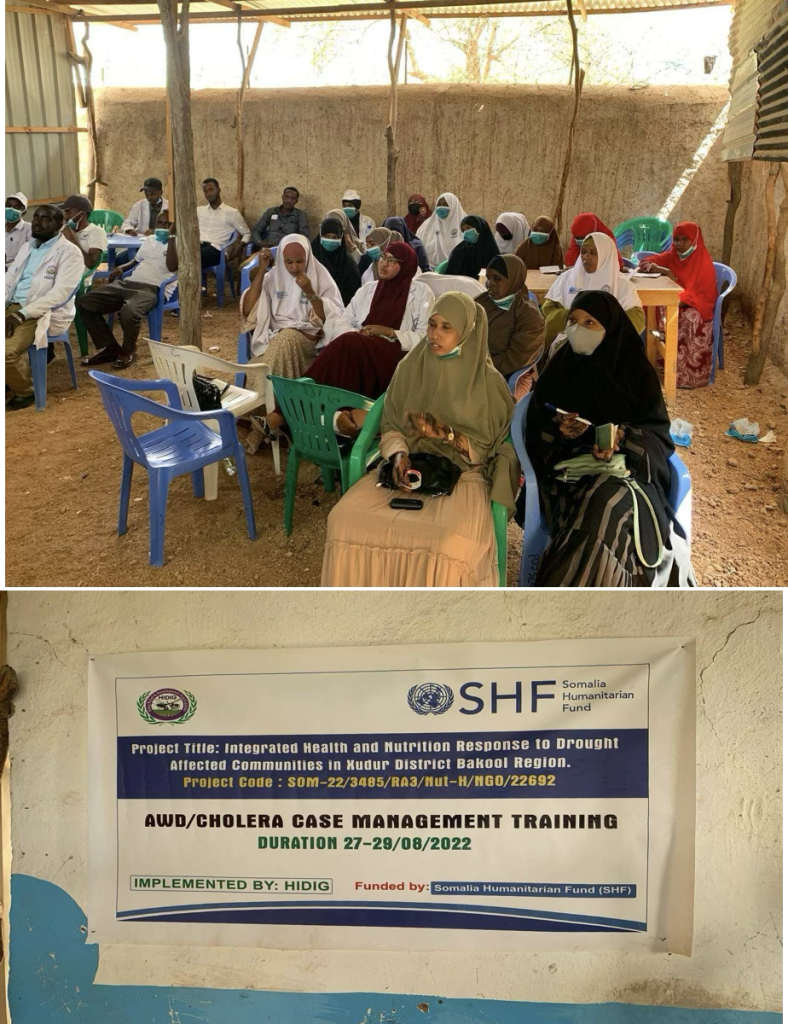
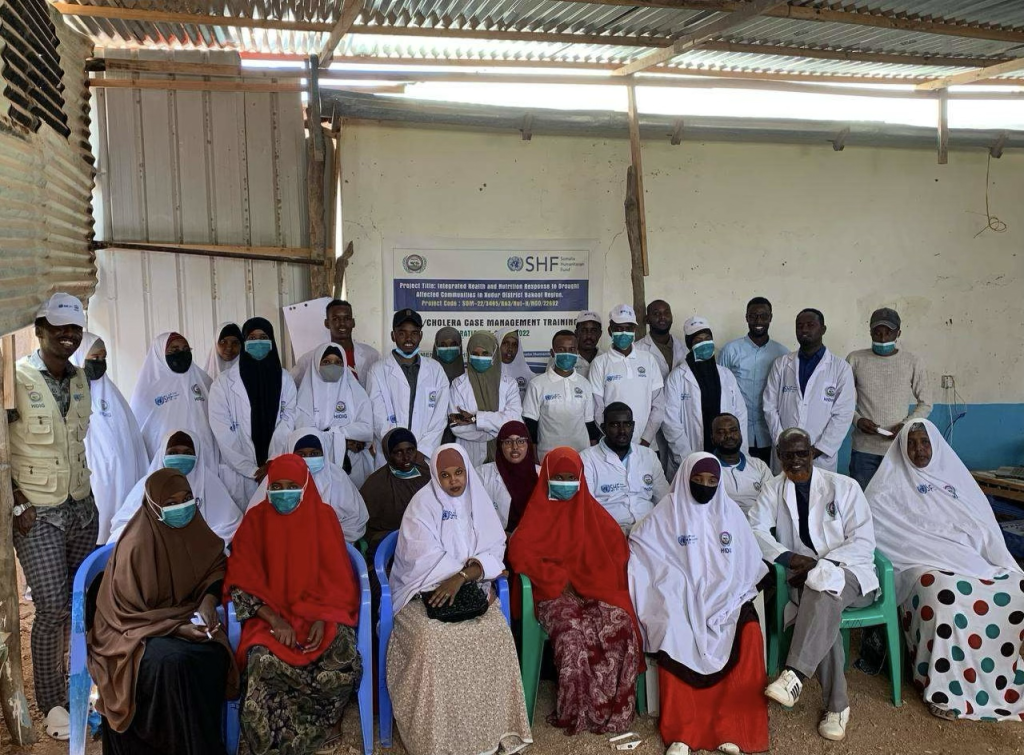
In this back drop HIDIG organization is currently implementing integrated response team in responding to the floods affected population in Xudur district and thus the project aims to trained a total of 68 participants HIDIG health staff with integrated AWD/cholera case management (AWD/cholera)
- Objective of the training
- Enhance project field health staff capacity on improved AWD/cholera case management services delivery
- To cascade public health information on hygiene and health seeking practices to the grassroots IDPs and host communities.
- Equip health workers with AWD preventive measures and reduces AWD/cholera case occurrence in the target area
- Training proceeding
- 1: Opening and introduction
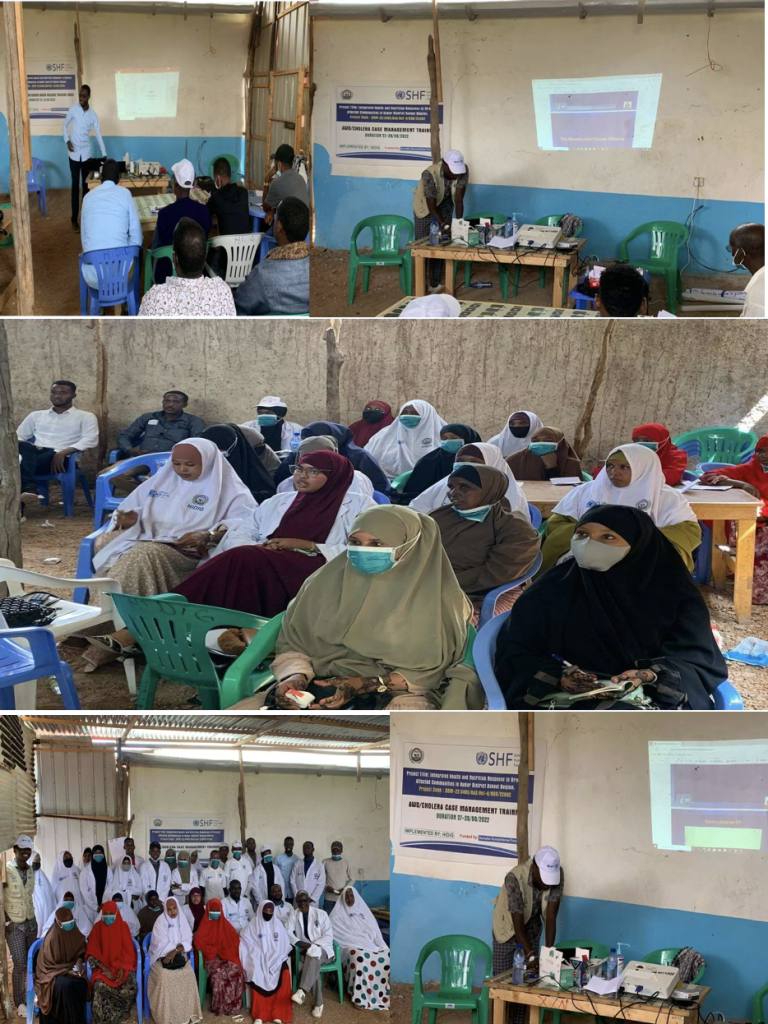
The training was open by HIDIG program manager and the training facilitator of the day, it was also attended by the Xudur MOH local authority representatives as well as the federal government ministry of health.
- 2: Norms
- Respect to once opinion
- Mobile in silent
- Keep distance and control personal contact
- 3: Expectation
.To improved knowledge of the participant in order to manage problem related to integrated management of childhood illness and other communicable diseases in their primary health intervention sites
- Understand referral modalities in case of suspect complication within the IDPs in Xudur town health centers
4. :Training session
- 1: Training agendas
| Time | Topic |
| Day 1 | Introduction/climate setting |
| Definition of AWD and what it entails | |
| How to recognize general danger signs | |
| AWD, clinical features, stages and management of AWD | |
| Recap of day one | |
| Degree of Dehydration, Signs and Treatment Plans for Cholera Patients | |
| Management and prevention mechanism of AWD /cholera | |
| Referral paths and reporting mechanism in case of suspected cases in health centers and outreach clinics. | |
| Day 2 | Recap of day two |
| Oral rehydration for patients with no signs of dehydration | |
| ALC methods(Ask, look and classify) | |
| Recap of day three | |
| Management of Pneumonia | |
| Case follow up | |
| Day 3 | Recap day four |
| Quantity of ORS to be Given after Each Loose Stool by Age Group | |
| Intravenous (IV) Therapy for Severe Dehydration | |
| Quantity of Ringer’s Lactate Solution by Age Group. | |
| Zinc supplementation in the management of children aged 6 months to 5 years with watery diarrhoea | |
| Hygiene promotion and food handling | |
| Household water treatment and handwashing |
- Description of methodologies[Methods, tools and Materials]
- 1: Methods
- Oral presentation
- Question and answers
- Simulation exercise
- 1: Methods
- 2: Materials
- Flip chart papers and stand (mark pens)
- Simulation photos for prevention and awareness creation
1.6.3:Topics covered
- AWD/cholera and its objectives
- General danger sign
- Dehydration: signs, symptoms and management
- Diarrhea: signs, symptoms and management
- ORS quantity administration
. Intravenous (IV) Therapy for Severe Dehydration Relationship between illness and nutrition Hygiene promotion and food handlings Household water treatment and handwashing
- Training achievement/Outcome
- HIDIG health staff awareness enhanced and will be able to cascade the same in their respective area
- Health staff acquired basic skills and knowledge in integrated AWD/cholera case management hence have confidence in delivering result oriented in emergency health care
- Improved coordination, referral and reporting skills among the staff enhanced, while tasking the field in charge to deliver coordinated response reporting
- Recommendation
- Through the discussion both field team and training facilitator the participant requested training manual with simplified in Somali language
- On job training of the project staff to ensure new case management and up to date clinical case management
- Trained different level of community on prevention of diarrhea and malaria
- Training photos.