
- Table of Contents
- Table of Contents 1
- Introduction 2
- Infant and young child feeding counselling 2
- Objective 2
- Topics covered during the workshop 3
- Benefits of breastfeeding for the child 3
- Benefits of breastfeeding for the mother 3
- Benefits of breastfeeding for the family and community 3
- Recommended breastfeeding practices 3
- Suggested reasons why women don’t breastfeed 4
- Benefits of optimal complementary feeding (timely, adequate, appropriate and safe) 4
- Techniques of breastfeeding and good practices 4
- Recommendations 4
- Conclusion 4
- Annex1. Attendance sheet Error!Bookmarknotdefined.
- Photos 5
2. Introduction
HIDIG has emphasized IYCF services for infant young child feeding best practices (IYCF), as well as to conduct caregivers’ infant and young child feeding practices, IYCF promotion session for better information dissemination to the caregivers in the project area in Beledweyne Districts of Hiran region. HIDIG will strictly follow COVID-19 protocol during the IYCF-E session by ensuring the limited number of caregivers/parents in each counselling session; It will also ensure that target beneficiaries have COVID-19 prevention measures such as a mask for the caregivers. Referral of malnourished children with complicated cases will be done to the Outpatient Therapeutic Programme (OTP) centers integrated with primary health care services managed by HIDIG and other actors in the program areas thus providing more holistic opportunity to the target beneficiaries. However, HIDIG endeavours to undertake health and Nutrition activities that will be integrated in the sense that under-five children’s boys, girls admitted at the OTP sites will be immunized against measles and other communicable diseases and as well the SAM complicated cases referred to the stabilization centres for proper medical treatment, on the same note the mothers visiting ANC/PNC at the mobile clinic will be provided both IYCF-E to the caregivers/parents in the target district
- Infant and young child feeding counselling
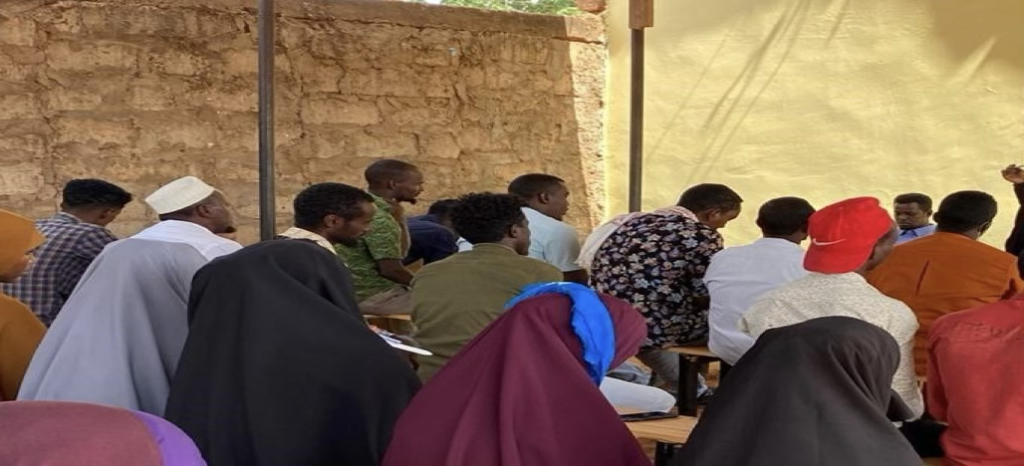
HIDIG has conducted regular individual IYCF-E counselling 6 sessions for last three Month from May 2022 to 31st August, 2022 through the five IERT sites in Beletweyne district targeting both the host community and IDPs, a total of 360 beneficiaries/caregivers were reached where each counselling session was able to reach 30 caregivers per session for two sessions per months and hence a total of 360 caregivers/participants of both caregivers were able to promote optimal infant and young child feeding with support from the community mobilisers and community nutrition volunteers. The IYCF counsellors have increased knowledge and practices of key nutrition actions. All mothers/caretakers have counsel on IYCF practices at IERT centers. One-to-one counselling using illustrative IYCF counselling cards will be provided to PLW found to have breastfeeding difficulties or sub-optimal IYCF practices. Key messages have been designed as small, do-able actions and communications techniques will be used to promote the adoption of these actions, HIDIG have ensured the IYCF-E counsellors follow strict COVID-19 protocols such as hand sanitizing and one- meter distance role as well as to conduct the counselling in an open-air space to avoid congestion of the beneficiaries.
- Objective
IYCF-E counsellor have provided supportive supervision for health workers and community workers to implement integrated infant and young child feeding counseling and support (addressing both breastfeeding and complementary feeding) at key maternal and child health contacts through nutrition and health activities in Beledweyne District of Hiran region
HIDIG promised to ensure that IYCF component is integrated to all the agency’s nutrition and health activities to ensure that all the P&LWs and women of childbearing age are educated with the 10 Steps to efficient and effective breastfeeding or the Baby Friendly Hospital Initiative (BFHI). To achieve this, HIDIG has trained IYCF staff have so far conducted two educative counseling sessions per months in Beletweyne district, each counseling sessions were conducted in both health facilities and mobile IERT teams’ sites and it was quite successful but again it was very clear that most of the
mothers and health workers who attended the counseling sessions had little or no knowledge about the IYCF as nutrition component and as a good practice. Indeed, they have gained a lot of knowledge and skills from the sessions respectively and the mothers were practically shown all the techniques in breastfeeding and other good practices needed to ensure the child’s health and good development.
Of all proven preventive health and nutrition interventions, IYCF has the single greatest potential impact on child survival. Therefore, reduction of child mortality can be reached only when nutrition in early childhood and IYCF specifically are highly prioritized in all health and nutrition programs.
This initiative seeks to address the current nutrition problems in the five IERT sites in Beletweyne district Hiran region to reduce the morbidity and mortality rates, improve the health/nutrition of the general population with more emphasis to women and infants in the geographical area and sustain the benefits realized during the past health & nutrition interventions.
- Topics covered during the workshop
- Breastfeeding and breast milk
- Benefits of breastfeeding for the child, mother, family, and community
- Benefits of breastfeeding for the child
- Emotional
- bonding between mother and baby
- Increased immune defenses for the baby reducing illnesses
- Mother is more emotionally satisfied
- Baby may be more emotionally secure
- Cognitive development
- Children perform better on intelligence tests
- Benefits of breastfeeding for the mother
- Breastfeeding also has a number of benefits for maternal health.
- Delays the return of fertility
- More rapid return to pre-pregnancy weight; lower postpartum weight retention
- Lowers risk of pre-menopausal breast cancer and ovarian cancer
- Benefits of breastfeeding for the family and community
- Decreases absence in the workplace because of decreased family illness
- Lowers expenditures for food and healthcare
- Provides a safe food in emergency and disaster situations
- Supports the environment, reducing use of fuels, pharmaceuticals, plastic, and waste From the dairy industry
- Recommended breastfeeding practices
- Initiate breastfeeding early (within first hour after delivery)
- Breastfeed exclusively for 6 months
- Continue breastfeeding to 24 months and beyond
- Breastfeed on demand
10. Suggested reasons why women don’t breastfeed
- Mothers have little or no milk
- Another pregnancy
- Family and peer Pressure to stop, especially after 12 months
11. Benefits of optimal complementary feeding (timely, adequate, appropriate and safe)
- Reduced illnesses due to increased immunity for the baby
- Less diarrhea and respiratory infections
- Prevention of overweight/obesity
- Optimal growth
- Less risk of zinc and other micronutrient deficiencies
- Improved cognitive development
- Better psychosocial development
- Improved productivity and economic status
12. Techniques of breastfeeding and good practices
- Mothers were taught on how to physically place the child when breast feeding to reduce discomfort for both mother painful nipples) and child comfort during breastfeeding.
- In addition, mothers were informed that the baby should be fed on demand and in small amounts at every given time paying close attention to the child – how to know when the child has had enough. Mothers were also taught on how to How to enhance breast milk supply, Hunger/Satiety cues comforting skills
- The mothers were also taught on the importance of the general cleanliness and how this
improves the growth and development of their children and how that saves the economy of the family.
13. Recommendations
- More health and nutrition worker to be trained on IYCF practices and mother counseling.
- More community sensitization meeting to be conducted.
- Some incentives and refreshment cost to be allocated for the community dialogues.
- Encourage the participation of mothers who have benefited from the IYCF sessions to encourage other mothers on the matters of breastfeeding and optimal complementary feeding practices so as to push for full behavior change within the community.
- Conclusion
In a nutshell, the workshops have been successfully conducted and the baseline objective of the sessions were reached targeted mothers on IYCF practices and key messages on how to counsel mothers who are appearing at their respective sites.
15.Photos
Figure1: IYCF session ongoing at Siigalow location